
DAILY OUTFITTER BLOG
Clothing Care Symbols: How to Read the Label
By Daily Outfitter · · Updated
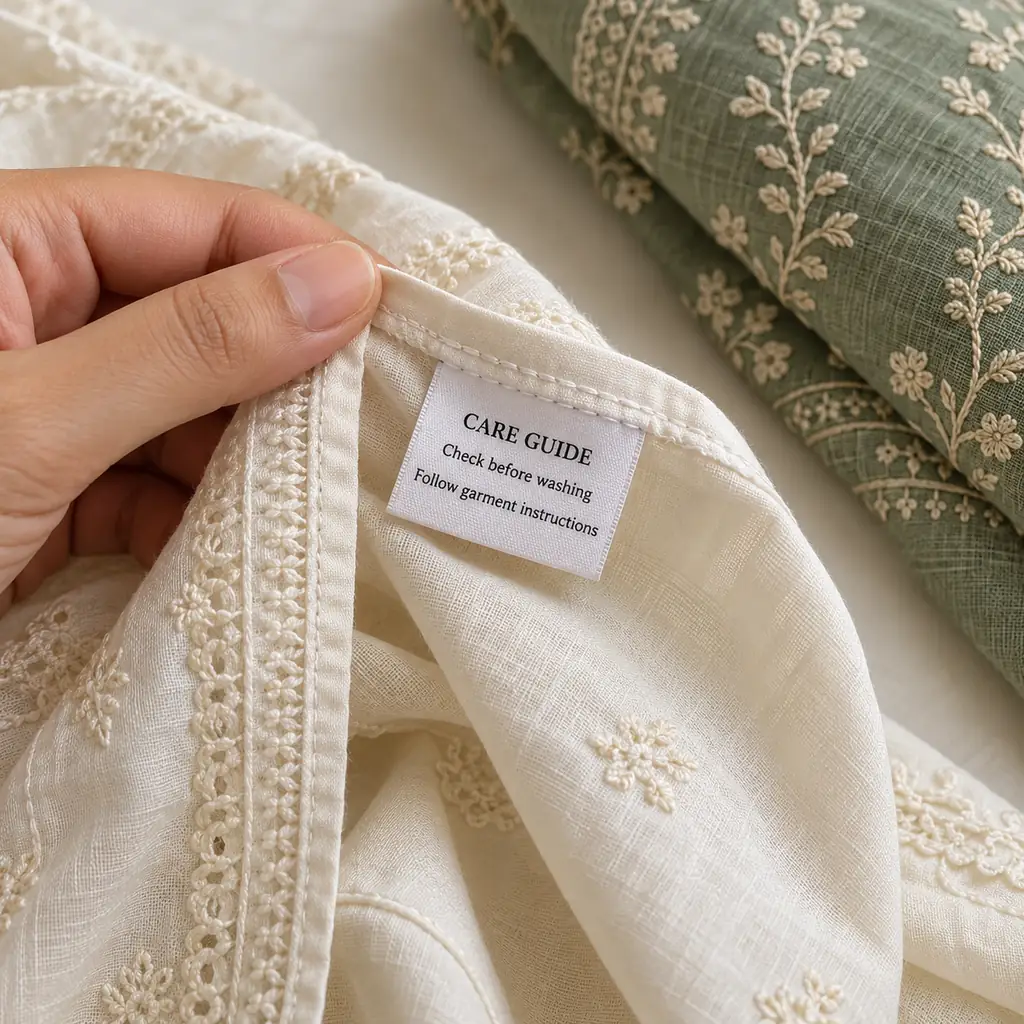
Read clothing care symbols as a set of instructions for the whole garment: washing, bleaching, drying, ironing and professional cleaning. Check the complete mark and any written directions. A familiar fabric name is not permission to use your usual wash cycle or iron setting.
This guide explains how to approach a care label using the GINETEX/ISO system as a reference. Labels using another system may differ. Match an unfamiliar mark to the relevant official guide or ask the maker rather than guessing from a similar-looking icon.
The five groups to recognise
GINETEX groups its care symbols into the categories below. Use this table to find the right part of a label; use the full official reference to interpret the particular variant on your garment.
| Group | Basic shape to look for | What to check |
|---|---|---|
| Washing | A wash tub | Whether washing is allowed, temperature and process limits |
| Bleaching | A triangle | Whether bleaching is permitted and which type |
| Drying | A square, sometimes containing another mark | Tumble drying versus natural drying and any restrictions |
| Ironing | An iron | The permitted treatment and heat limits |
| Professional care | A circle with relevant markings | Instructions intended for a professional textile cleaner |
In this system, wash-tub numbers refer to maximum temperatures in Celsius, while bars below the tub indicate a milder process. Other marks, including crosses, dots and letters, change the instruction. Read them together, not as isolated decorations.
Use a short routine before the first clean
- Locate and photograph the full label.
- Read any written instructions beside the symbols.
- Identify the symbol system where possible.
- Check the complete washing, drying and pressing instructions.
- Ask about anything unclear before treating the garment.
A photograph is especially useful if you plan to ask the seller or a cleaner for help. Include the whole label and a picture of the garment, not a cropped dot or letter with no context.
Do not choose care from the outer fabric alone
A kameez can include outer fabric, lining, embroidery, thread and attached decorative details. The trouser and dupatta may be different again. Your memory of washing another lawn suit is not a substitute for instructions for this one.
Similarly, “wash-and-wear” is not an instruction to use any machine programme. Check the exact item. Our wash-and-wear fabric comparison explains why a trade name does not establish every material property.
Turn an unclear label into a clear question
Instead of asking “Can I wash this?”, explain what you have and what you want to do. For example: “The shirt has embroidered panels and a separate dupatta. Could you confirm the cleaning and pressing instructions for each component, and whether the finished lined shirt needs a different method?”
If you are using a professional cleaner, show the care label and point out embellishments, loose parts and any known previous treatment. Let the professional interpret cleaning-process letters rather than treating them as a home-cleaning recipe.
What if an unstitched suit has no sewn-in label?
An uncut fabric set may arrive with instructions on its packaging or in the seller's written information rather than a label sewn into a garment. Save that information with the component list before sending the fabric to your tailor.
If the instructions are absent, request them. Do not invent a washing programme from the product photograph or assume a delicate cycle makes every item washable. When selecting lining or additional trim, ask the tailor how those choices affect the care of the completed outfit.
Three everyday situations
The seller's message and the label seem different
Pause and ask the seller to reconcile the instructions for the exact item. Send a photograph of the label and the order reference. Keep the answer so the next person cleaning the suit has the same information.
You want to press a creased dupatta before a function
Read its own pressing instructions rather than borrowing the shirt's setting. Check whether the full mark includes restrictions you have overlooked. If the instructions are unclear, ask before using direct heat or steam.
You are handing a finished outfit to someone else to wash
Share the label photograph and any confirmed seller instructions. Keep components together with the order reference so similar-looking dupattas or shirts do not get mixed up. A clear note is more useful than “wash all my suits as usual.”
Keep the care information with the outfit
Create a simple phone album or note for suits with different requirements. Record which label belongs to which garment and keep written clarifications beside it. When your tailor adds lining or replaces trim, update the note after confirming the finished-garment instructions.
For specific embroidered clothing advice, read our embroidered lawn suit care guide. When comparing embroidered suits or men's suit fabrics, ask about care alongside fabric and dimensions.
Frequently asked questions
Do a drying symbol and a washing symbol mean the same thing?
No. They refer to separate stages. Read the instructions for both rather than assuming that permission to wash also permits tumble drying.
Can a fabric name tell me the correct iron setting?
It is not enough on its own. Use the instructions for the exact garment, including any restrictions associated with decoration or additional layers.
Are all clothing labels identical worldwide?
No. Identify the applicable symbol system and written instructions. This guide uses GINETEX/ISO terminology and does not replace other official label references.
Should I remove the label after reading it?
Keep the care information available for future use. If a label needs attention because it is uncomfortable, first save a clear photograph and ask about an appropriate solution.
Source
Symbol categories and interpretation reference: GINETEX's official care-symbol guide under ISO 3758:2023, checked 18 October 2026. The workflow and suit examples are Daily Outfitter's editorial advice. This article describes categories in words rather than reproducing a set of care-symbol graphics.
Feature image: AI-generated editorial illustration for this guide. Garments, fabrics and labels shown are illustrative examples.