




Chikankari Lawn: What It Is, How It's Made, and What a Fair Price Looks Like
Chikankari is the most misused word on a Pakistani product page. It appears on suits that were never touched by a needle, and it appears on suits that took an artisan two weeks. Both are listed as "chikankari lawn," and from a photograph they can look almost identical.
This guide explains what chikankari lawn actually is, how a real piece is made, how to tell hand work from machine work, and what genuinely drives the price — so you know whether you're paying for craft or for a word.
What Chikankari Actually Is
Chikankari is a traditional hand-embroidery craft, historically associated with Lucknow and dating back to the Mughal era. It is worked in fine thread — classically white on white, though tonal and coloured thread are common now — on lightweight fabrics: muslin, cotton, chiffon, organza, and today, lawn.
The defining quality is restraint. Chikankari is not heavy, glittering embroidery. It is texture: raised, shadowed, subtle, best seen when the light moves across it. That is precisely why it suits lawn — a fabric already prized for being light and breathable.
How a Real Chikankari Suit Is Made
The traditional process has four stages, and understanding them tells you where the cost goes:
- Block printing. The design is stamped onto the plain fabric using wooden blocks and a washable dye — a temporary guide, not the final pattern.
- Embroidery. Artisans stitch by hand over the printed lines. This is where the weeks go. A densely worked shirt panel can take one person many days.
- Washing. The finished piece is washed to remove every trace of the block-printed guide, leaving only the thread.
- Finishing. Starching, pressing, and any additional work — laser-cut edging, mukaish, or stone detailing.
That washing step is the giveaway. Genuine chikankari must be washed, which is why real pieces arrive soft rather than stiff.
The Stitches Worth Knowing
Traditional chikankari uses more than thirty named stitches. You only need to recognise a handful:
- Taipchi — a simple running stitch, used for outlines and as the base for other work. The most economical stitch, and the one most heavily used in cheap pieces.
- Bakhiya — shadow work, and the most famous stitch of all. It is worked on the reverse of the fabric, so the thread shows through the sheer cloth as a soft shadow. Turn a bakhiya piece over and you see a dense herringbone; from the front, only the shadow.
- Phanda and murri — tiny knot stitches used for flower centres. Murri is rice-shaped, phanda is rounder. Both are slow, which makes them expensive.
- Jaali — a net effect. Critically, the mesh is made by teasing the fabric's own threads apart with the needle, never by cutting. Real jaali leaves no cut edges.
If a listing names its stitches, that's a good sign. It usually means someone who understands the craft wrote the description.
Hand Chikankari or Machine Work: Five Ways to Tell
- Look at the back. This is the fastest test. Hand work has a considered reverse — with bakhiya, a neat herringbone. Machine embroidery leaves a flat, uniform bobbin line and often loose jump threads between motifs.
- Look for irregularity. Hand-worked motifs vary very slightly from one to the next. Machine motifs are identical every time. That variation is the proof of authenticity, not a defect.
- Check for the shadow. Genuine bakhiya reads as a soft shadow through the cloth. Machine imitations sit on the surface.
- Feel the hand. Hand chikankari is soft and drapes. Machine embroidery, especially dense work, stiffens the fabric.
- Check the jaali. Real jaali has no cut threads. Cut-work net is a different, cheaper technique.
What Actually Drives the Price
Price differences in chikankari lawn are almost never arbitrary. Six things move the number:
| Factor | Lower price | Higher price |
|---|---|---|
| Method | Machine-run embroidery | Genuine hand chikankari |
| Density | A few motifs on the front panel | All-over work, sleeves and back included |
| Stitches used | Mostly taipchi (fast running stitch) | Bakhiya, phanda, murri, jaali — all slow |
| Base fabric | Blended lawn | Fine pure cotton lawn |
| Dupatta | Plain or printed lawn | Chiffon, or embroidered to match |
| Finishing | Plain hem | Laser-cut edging, stone or mukaish work |
When you compare two suits, compare these six things — not the photographs. Two listings at very different prices are usually selling genuinely different objects.
Three Red Flags
- "Hand chikankari" priced like a basic printed lawn. Hand embroidery is days of labour. If the price doesn't reflect that, the labour didn't happen.
- Every motif identical, at high magnification. Zoom into the product photo. Perfect repetition means a machine.
- No photograph of the reverse, and no answer when you ask for one. A seller with genuine hand work is usually pleased to show you the back.
Caring for Chikankari
- Hand wash gently in cold water, or dry clean. Machine agitation pulls threads loose.
- Never wring it. Press the water out between two towels instead.
- Dry flat, in the shade. Hanging wet embroidered lawn stretches it out of shape.
- Iron on the reverse, never directly over the stitches. A pressing cloth helps.
- Store folded, not hung. Long-term hanging drags on the embroidery.
How to Wear It
Chikankari's advantage is that it works twice. Worn plain with simple trousers and flats, it is daywear — light enough for Pakistani heat, quiet enough for the office. Add a chiffon dupatta, some gold, and heels, and the same suit reads as evening wear. Very little else in a lawn wardrobe does both.
White and tonal work is the most versatile. Coloured thread on a deeper base leans dressier from the start.
Shop Chikankari Lawn
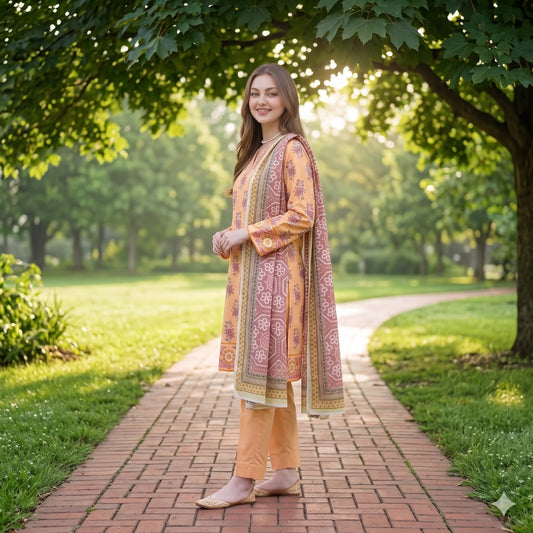
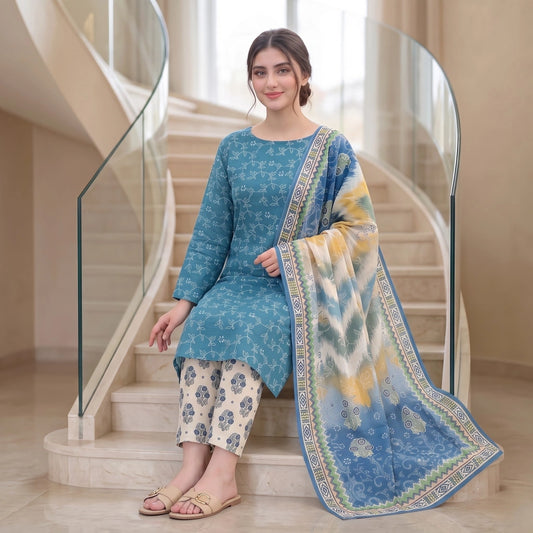
Our Fancy Lawn collection is hand chikankari on pure lawn, finished with laser-cut detailing — each one a 3-piece with shirt, dupatta and trouser.
- Fancy Lawn — chikankari 3-piece →
- Purple Chikankari Lawn →
- Sapphire Blue Chikankari Lawn →
- Teal Chikankari Lawn →
- Printed & embroidered lawn →
- Party wear — heavier handmade embroidery →
Buying unstitched? Read our guides to daily outfitters online shopping and taking your stitching measurements before you order.
Frequently Asked Questions
What is chikankari?
Chikankari is a traditional hand-embroidery craft, historically associated with Lucknow and dating to the Mughal era. It is worked in fine thread on lightweight fabrics such as muslin, cotton, chiffon and lawn, and is known for subtle, textured, shadowed work rather than heavy glitter.
How can I tell real hand chikankari from machine embroidery?
Look at the reverse of the fabric. Hand work has a considered back — with shadow work, a neat herringbone. Machine embroidery leaves a flat, uniform bobbin line and loose jump threads. Hand motifs also vary very slightly from one to the next; machine motifs are identical.
Why is hand chikankari more expensive?
Because it is days of skilled labour. Density of the work, the specific stitches used, the quality of the base lawn, the dupatta fabric, and the finishing all move the price. A densely worked hand piece can take an artisan more than a week.
What is bakhiya?
Bakhiya is chikankari shadow work — the best-known stitch. It is embroidered on the reverse of the fabric so the thread shows through the sheer cloth as a soft shadow from the front.
How do I wash a chikankari suit?
Hand wash gently in cold water or dry clean. Never wring it — press the water out between towels. Dry it flat in the shade, iron on the reverse, and store it folded rather than hung.
Is chikankari lawn suitable for everyday wear?
Yes. That is one of its strengths. Worn plainly it is light enough for daily wear in the heat; paired with a chiffon dupatta and jewellery, the same suit works for the evening.