
DAILY OUTFITTER BLOG
How to Store Unstitched Suits Before Tailoring
By Daily Outfitter · · Updated
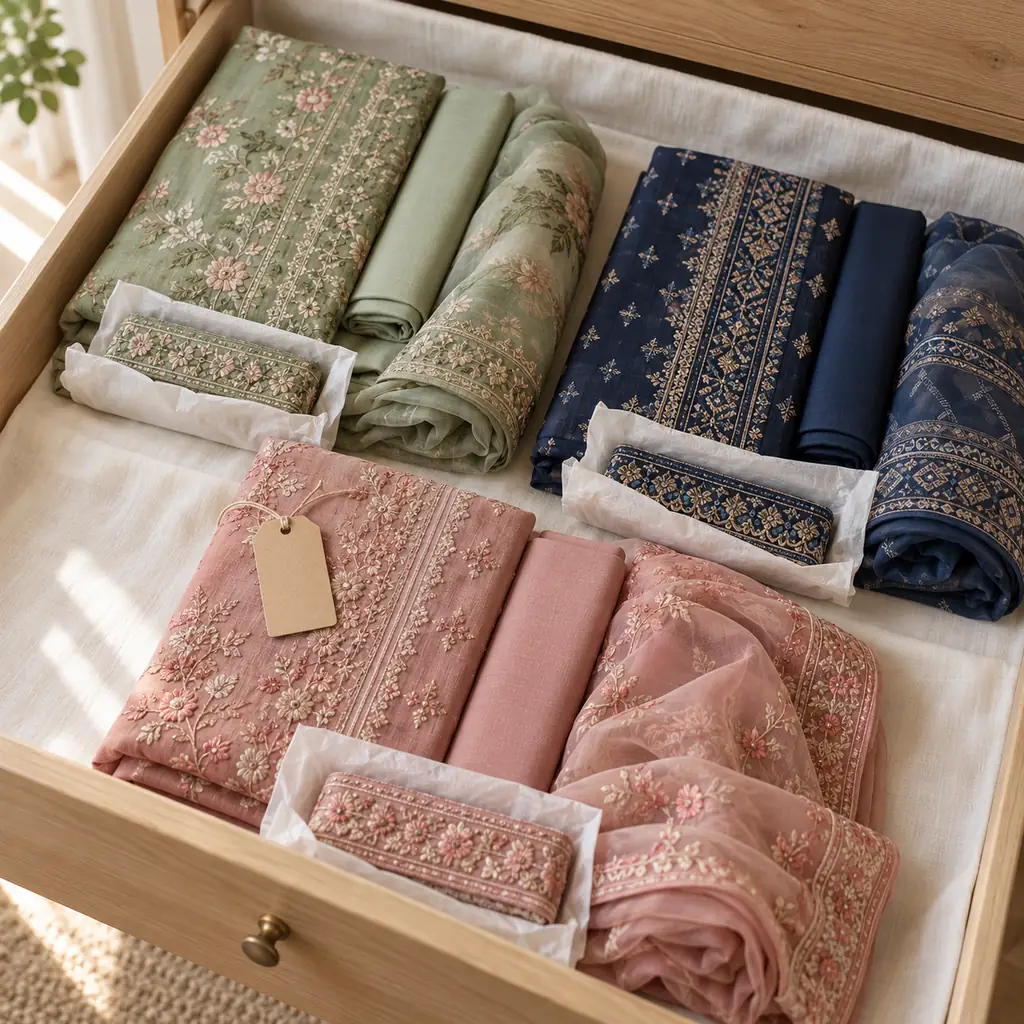
Store unstitched suits in a clean, dry place away from direct light, with the fabric supported and all components kept together. Label each bundle before putting it away. Do not seal damp cloth in a bag or wash an embellished set without checking its specific care instructions.
The purpose is practical: when the fabric reaches your tailor, you should know what the set contains, which pieces belong together and what has already been checked. A simple system helps prevent misplaced borders, forgotten dupattas and avoidable repeat handling.
Inspect the complete set before storing it
Open the parcel on a clean surface and compare the components with your order. Identify the shirt fabric, trouser, dupatta and any separate patches or borders. Keep the listing and order details until you have checked what arrived.
If a component is missing or something appears damaged, raise it with the seller under the applicable policy before washing or cutting. For a Daily Outfitter purchase, consult the current returns and complaint terms; storage should not delay a time-sensitive report.
Use a labelled bundle for each outfit
Give every set a short reference, such as “Sage print — family lunch.” Keep loose components inside their own clean, labelled envelope or protective wrap within the same bundle. Do not attach a sticky label directly to the fabric.
| Record | Example | Why it helps |
|---|---|---|
| Set reference | Sage print, ordered in October | Identifies the bundle without reopening it |
| Included components | Shirt, trouser, dupatta, two loose borders | Makes a missing piece easier to notice |
| Care information | Seller's instructions saved with the order | Avoids guessing before washing or pressing |
| Tailoring plan | Straight shirt; neckline not decided | Separates a confirmed decision from an idea |
| Next action | Show layout to tailor before cutting | Turns stored fabric into a clear project |
A phone note and one full-layout photograph can be enough. Keep the record where you can find it; there is no need for an elaborate inventory app.
Choose the storage space before the container
Check the shelf or drawer for dampness, dust and anything that could snag the cloth. Keep fabric away from a known leak or a spot receiving strong light. The Canadian Conservation Institute identifies moisture, light and poor handling as important risks to textiles.
For ordinary wardrobe storage, choose a clean space you can inspect. A beautiful storage box does not solve a damp cupboard. Avoid pressing a large collection into a space where every bundle must be pulled out to reach one set.
Support the cloth and protect raised work
The Canadian Conservation Institute recommends flat support for many textiles and appropriate protective materials, including clean prewashed cotton or acid-free tissue. In a home drawer, use broad, gentle folds where necessary rather than compressing a suit into the smallest possible parcel.
Keep raised embroidery from catching on adjacent cloth. Place a suitable clean separator where pieces rub together, and avoid loading a heavy stack over delicate work. For heavily embellished or fragile fabric, ask a textile-care professional about an appropriate arrangement.
For care after stitching, use our embroidered lawn suit care guide. The storage checklist here is specifically for organising the uncut set and its separate components.
Do not treat every bag as long-term packaging
A delivery sleeve protects a parcel during transport; that does not automatically make it suitable for months of storage. CCI distinguishes suitable storage containers from thin garment bags that can allow moisture problems. Whatever container you use, start with dry fabric and a dry storage space.
Keep order paperwork separately if its paper or printing may transfer to cloth. If you add a reference photograph to the outside of a bundle, you can identify the set without repeatedly unfolding it.
Should you wash unstitched suits before storing them?
Do not automatically wash every new set. The appropriate preparation depends on the actual fabric, dye, embroidery and care instructions. Confirm the method with the seller or tailor before treating it, particularly where loose patches and embellished panels need different handling.
Record any preparation that has been done so the tailor does not have to guess. If the suit has no clear care information, getting that information is the next task; storage is not a reason to experiment with a home remedy.
Check the bundle when your plans change
When you move the fabric, change seasons or schedule tailoring, check that the bundle is still dry, complete and easy to handle. Investigate a new mark, unusual smell or visible pest activity rather than covering it with fragrance and closing the cupboard.
If you discover a problem, separate the affected bundle from other clothes and ask an appropriate professional how to proceed. Avoid adding treatments that could mark the fabric or obscure the original issue.
Make the tailor handover simple
- Bring the complete bundle and component list.
- Show the original fabric layout and your preferred design separately.
- Confirm which borders or patches are intended for which areas.
- State what preparation, if any, has already been done.
- Ask the tailor to confirm fabric allowance before cutting.
Read our kameez measurement guide before the appointment. When choosing your next set from Ladies Wear or Gents Wear, check the supplied components and fabric dimensions first.
Frequently asked questions
Can I keep several unstitched suits in one drawer?
Yes, if the drawer is suitable and each set remains supported, identifiable and separate from items that could snag it. Avoid overfilling it.
Should I remove loose borders from the bundle?
Keep them separately protected within the same labelled set, with a count in your record. Separating them into an unrelated drawer makes them easier to lose.
Will good storage remove existing creases or stains?
No. Storage protects and organises the cloth; it is not a treatment for an existing problem. Ask about appropriate care before pressing or cleaning.
Sources and scope
General preservation principles: Canadian Conservation Institute, Basic Care — Textiles and Caring for Textiles and Costumes. These are conservation references; the inventory and tailor-handover routine is Daily Outfitter's practical adaptation for modern unstitched suits. Checked 18 October 2026.
Feature image: AI-generated editorial illustration for this guide. Garments, fabrics and labels shown are illustrative examples.