




Online Clothes Shopping in Pakistan with Cash on Delivery: The 2026 Guide
Most people in Pakistan who hesitate to buy clothes online aren't worried about the internet. They're worried about one specific thing: paisay pehle de diye aur cheez waisi na nikli to?
It's a fair concern, and it's exactly why cash on delivery became the default here rather than a niche option. You don't pay until the parcel is in your hand.
But COD only protects you from one risk — losing money to a seller who never ships. It doesn't protect you from ordering the wrong thing. This guide covers both: how COD works, and the nine checks that actually determine whether you'll be happy with what arrives.
Why cash on delivery still runs Pakistani e-commerce
Card penetration is low, digital wallets are growing but not universal, and there's a long memory of online orders that didn't match their photos. COD solved a trust problem before the trust existed.
It survives because it works both ways. You get to see the parcel before paying. The seller gets an order from someone who might otherwise never have bought at all.
The one thing to understand: COD is not a free trial. In most Pakistani stores you cannot open the parcel, try the suit on, and hand it back to the rider. Refusing parcels at the door is also what drives sellers to blacklist customers and start demanding advance payment. Order things you actually intend to keep.
How COD works, step by step
- You place the order with a complete address and a working phone number. Incomplete addresses are the single biggest cause of failed deliveries in Pakistan.
- The store confirms and packs it. At Daily Outfitter this takes 1–2 business days, excluding Sundays and public holidays.
- The parcel is handed to a courier — typically TCS, Leopards, M&P or CallCourier.
- The rider calls before arriving. Keep your phone reachable. Two missed calls and most riders mark the parcel undelivered.
- You pay cash at the door and receive the parcel. Keep the receipt.
Keep the right amount of cash ready. Riders often don't carry change for large notes, and a Rs. 5,000 note against a Rs. 3,420 parcel can genuinely mean the parcel goes back with him.
Nine checks before you order from any Pakistani clothing site
These apply to any store, not just this one. Run through them and your rate of disappointing parcels drops sharply.
- Is the metreage stated? A real 3-piece suit is roughly 7–7.5 metres total. If the listing doesn't say, ask before ordering. Short-cut suits are the most common quiet compromise.
- Is the dupatta fabric named? Lawn, chiffon, organza — it should be written down. Vagueness here usually means a thin same-fabric dupatta.
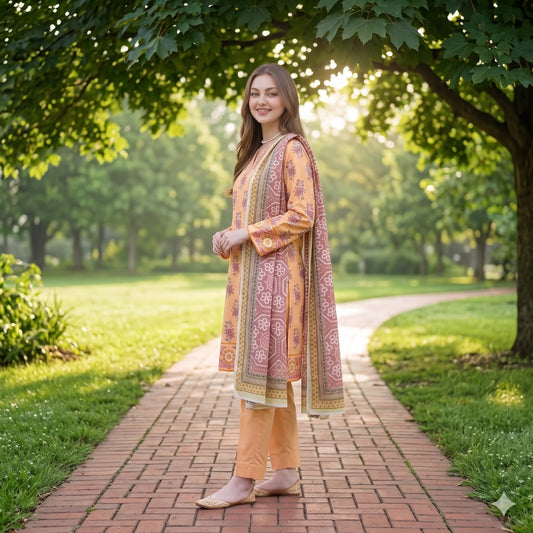
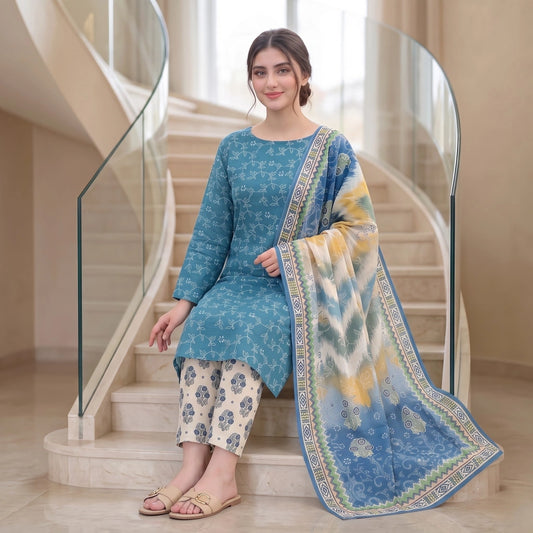
- Are there flat-lay photos, not just model shots? Model photography is styled and lit to flatter. A flat photograph of the actual fabric tells you far more.
- Does the store have a working phone number? A WhatsApp number that replies during stated hours is worth more than a contact form.
- Is the return policy written down and specific? "Easy returns" means nothing. You want the actual window and the actual conditions.
- Are prices consistent? A permanent 60% discount was never a discount.
- Do the reviews mention specific products? Generic five-star praise is easy to manufacture. Reviews that name a colour, a fabric and a city are harder to fake.
- Is stitching included or not? Unstitched means fabric only. Budget your tailor's fee on top before you decide something is cheap.
- Which courier do they use? Named couriers mean traceable parcels. "Our own delivery service" in a city they aren't based in usually doesn't.
How to judge fabric from a photograph

You can't feel it through a screen, but you can read it. Four things to look for:
- Fold behaviour. Good lawn falls in soft, rounded folds. Stiff, angular creases in a product photo often mean a coarser or synthetic-blended fabric.
- Print sharpness at the edges. Digital printing holds fine detail and soft gradients. Flat blocks of colour with slightly fuzzy boundaries indicate rotary or screen printing — not bad, but it should be priced accordingly.
- Whether light passes through. If a photo is shot against a bright background and you can see through the fabric, it will be sheer in person too.
- Embroidery texture. Real hand embroidery sits slightly raised and varies subtly between motifs. Machine work is perfectly identical every repeat and often looks flat.
One more thing worth knowing: screen colour is never exact. Every phone and monitor renders colour differently, and most Pakistani stores — including this one — don't accept returns for colour variation caused by display settings. If a precise shade matters, message the seller and ask for a photo taken in daylight.
Delivery times across Pakistan

| Area | After dispatch | Total from order |
|---|---|---|
| Karachi, Lahore, Islamabad, Rawalpindi, Faisalabad, Multan, Peshawar, Gujranwala, Sialkot | 2–4 business days | 3–6 business days |
| Smaller cities and towns nationwide | 3–6 business days | 4–8 business days |
Add time around Eid, 14 August and the wedding season, when courier volumes spike. Weather and strikes affect this too — no seller in Pakistan can guarantee a date through a courier network they don't own.
Planning for an event? Work backwards. If the suit is unstitched, you need delivery time plus ten days for your tailor, and tailors are booked solid in the fortnight before any major occasion.
What to do when the rider arrives

- Check the outside of the parcel before paying. Torn packaging, water damage, or a parcel that's clearly been opened — raise it with the rider then and there.
- Film yourself opening it. This sounds excessive until you need it. A single unbroken video from sealed parcel to opened contents settles almost every dispute about a missing or wrong item.
- Check contents against your order. Count the pieces. A 3-piece should be kameez, shalwar and dupatta.
- Contact the store within 24 hours if anything is damaged, wrong or missing. At Daily Outfitter that window is firm, so don't leave the parcel unopened for a week.
- Keep the packaging and tags until you're satisfied. Almost every Pakistani store requires original packaging for any exchange.
Returns and exchanges: know the rules before you order
This is where most disappointment comes from — not fraud, but mismatched expectations. Pakistani clothing stores generally run far tighter return policies than international retailers, and it's worth reading them before you order rather than after.
Daily Outfitter's policy, as an example of what's typical here:
- Accepted: damaged, wrong, or defective items — reported within 24 hours of delivery, unused and unwashed, in original packaging, with clear photos or video and your order number.
- Not accepted: change of mind, size issues on unstitched fabric, and colour differences caused by screen settings.
- Resolution: replacement or exchange is preferred over a cash refund. Approved refunds go through an agreed method such as bank transfer, Easypaisa or JazzCash.
The practical takeaway: because change-of-mind returns generally aren't available, the effort goes in before you order. Ask the questions first. Most stores would far rather answer three WhatsApp messages than process a return.
Red flags worth walking away from
- Advance payment demanded with no COD option and no established presence.
- Prices far below every other seller for what's described as identical quality.
- A social media page with no website, no physical address and no phone number.
- Product photos with another brand's watermark cropped out.
- Pressure tactics — "only 2 left" on every single item, permanently.
- No return policy page at all.
Frequently asked questions
Is cash on delivery safe in Pakistan?
For the buyer, yes — it's the safest payment method available, because you hand over money only when the parcel reaches you. It doesn't protect against ordering something unsuitable, which is why the checks above matter more than the payment method.
Can I open the parcel before paying?
Usually not. Most Pakistani stores and couriers operate on a pay-first-then-open basis. You can inspect the outside of the parcel for damage before paying, and you should film the unboxing afterwards.
How long does online clothes delivery take in Pakistan?
Typically 3–6 business days total to major cities and 4–8 to smaller towns, including 1–2 days of order processing. Expect longer around Eid, 14 August and peak wedding season.
What if the suit doesn't fit?
With unstitched fabric this isn't an issue — your tailor cuts to your measurements, which is the main reason unstitched remains popular in Pakistan. Size-related returns on unstitched fabric are generally not accepted anywhere.
What if my parcel arrives damaged?
Contact the store within 24 hours of delivery with your order number and clear photos or video of both the product and the packaging. Reporting late is the most common reason claims get refused.
Which cities does Daily Outfitter deliver to?
All major cities and most areas of Pakistan, through TCS, Leopards, M&P and CallCourier. Cash on delivery is available nationwide.
Ready to order
Start with New Arrivals, or go straight to the category you need:
- Printed Lawn — everyday 3-piece unstitched suits
- Fancy Lawn — chikankari and laser-cut work
- Party Wear — hand embroidery with chiffon dupattas
- Wash & Wear — men's 4-metre cutting pieces
- Purple Chikankari Lawn — a customer favourite
Cash on delivery across Pakistan. Any question about fabric, metreage or colour before you order — WhatsApp +92 300 9520579, Monday to Saturday, 11:00 AM to 8:00 PM.
Related reading: Lawn Suit Price in Pakistan 2026 · How to Take Stitching Measurements for a Kameez · A Buyer's Guide to Lawn, Party Wear & Stitched Suits